A reflection by Anisah Khan, Content & Copywriting Officer at Muslim Aid.
I have a distinct childhood memory of a day in Dhul Hijjah, before Eid Al-Adha. I was standing around the dining table at my cousin's house, and every inch of its surface was covered with raw Qurbani meat. I remember looking upon this mass of meat and thinking, “how gross.”
At the time, I didn’t understand what I was looking at. It felt excessive and messy. I couldn’t see beyond the surface, only that the adults were doing something strange, and it left me feeling quite uncomfortable.
It would take me years to understand what I was really witnessing.
It has slowly become clear to me what this month and the ritual of Qurbani represent: sacrifice. Sacrifice is complex, and it is definitely not meant to be comfortable. It stretches you beyond your instincts, beyond what feels easy or familiar. Now, when Dhul Hijjah comes around, I don’t see what I saw as a child; instead, I see meaning, obedience and generosity in action. Qurbani serves as a reminder that faith is not always about what feels good, but what brings us closer to something greater than ourselves.
In fact, reflecting on the word Qurbani reveals its deeper meaning. In Arabic, it comes from the root word qurb, which relates to nearness. So, at its core, Qurbani is an action which allows a person to draw nearer to Allah (swt). It is a physical expression of a spiritual intention.
One of the greatest examples of this closeness to Allah (swt) is found in the story of Ibrahim (AS), who was so near to Allah that he is known as Khaleelullah (Friend of Allah).
Ibrahim (AS) arrived at the truth of tawhid (the oneness of God) through reflection, reasoning, and sincere spiritual searching, before revelation came to him. His faith did not come without trials, and yet he remained firm in his belief. As the Prophet SAW said, 'If Allah wills good for someone, He afflicts them with trials.' (Bukhari 5645). Ibrahim's AS life was a series of such tests - from his earliest years in a polytheistic society, all the way through to the greatest trials that would define his legacy.
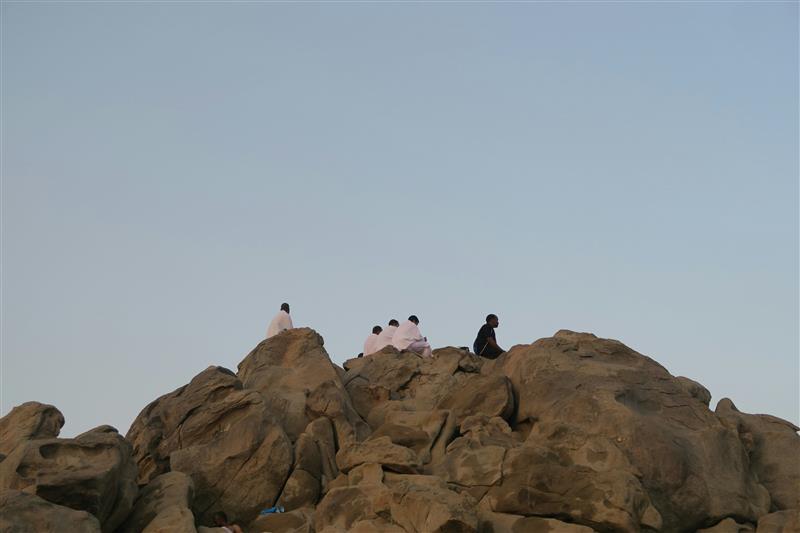
A story which a lot of us will be familiar with is the test of sacrifice Ibrahim (AS) endured. After years of longing for a child, he was finally blessed with a son, Ismail (AS). But his joy was short-lived: he was commanded by Allah (swt) to sacrifice his beloved son – a commandment almost unimaginable in its weight. In a profound display of submission and faith, Ibrahim (AS) prepared to obey, and Ismail (AS) stood behind him in obedience, showcasing that this was not just a test of a father’s love, but of a family’s shared faith. After a long and challenging journey, just as Ibrahim (AS) was about to fulfil the command, Allah provided a ram to be sacrificed in place of Ismail (AS).
Through this act, Ibrahim (AS) confirmed his absolute submission and tawakkul (trust and reliance on Allah swt) and lay the foundation for a legacy that would outlast him.
Upon reflection, the thing that stands out most clearly is the difference between Prophet Ibrahim (AS) and the Ummah today. We live in a time where even the smallest sacrifices can feel difficult, whether it’s giving up our time, comfort, or wealth. We struggle with far less: waking up for Fajr after doomscrolling throughout the night or donating to charity instead of buying another iced matcha. And yet, Ibrahim (AS) was willing to sacrifice what was most beloved to him, his own son, for the sake of Allah (swt).
This comparison may feel overwhelming, but it is meant to reframe how we understand sacrifice. Qurbani invites us to reflect: what are we willing to give up to grow closer to Allah (swt)? What attachments are we holding onto that distance us from Him?
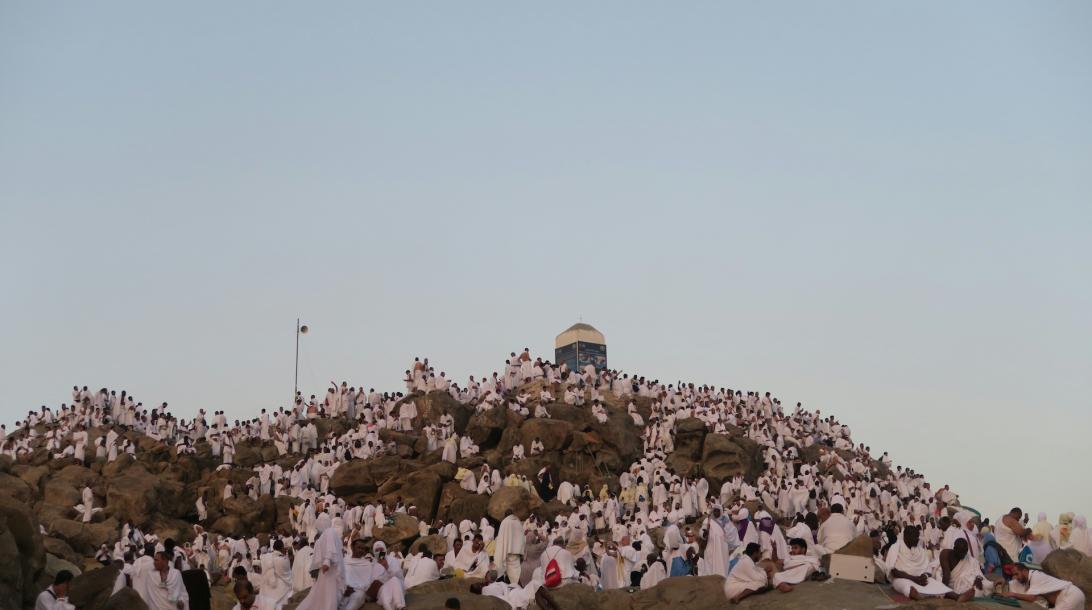
Today, Muslims around the world commemorate the legacy of Prophet Ibrahim (AS) through Qurbani during Dhul Hijjah. While sacrificing an animal is not comparable to the sacrifice Ibrahim (AS) was prepared to make, the essence lies in intention. It is about obedience, sincerity, and a willingness to give for the sake of Allah.
Qurbani is also deeply communal. It is an opportunity to give, to share, and to ensure that those less fortunate are included in the blessings of Eid. The meat that once seemed overwhelming to me as a child now represents generosity, unity, and care for others.
It is so much more than a ritual or a table covered in meat.
As Allah (swt) says in the Qur’an: “It is neither their meat nor their blood that reaches Allah, but it is your piety that reaches Him.” (22:37)
So when Dhul Hijjah comes, the question is not just what will we sacrifice, but what are we willing to let go of for the sake of Allah?
A reflection by Anisah Khan, Content & Copywriting Officer at Muslim Aid.
We are a faith-based British international charity that provides help to people who are victims of natural disasters or conflict or suffering from poverty, hunger, disease, homelessness, injustice, deprivation or lack of skills and economic opportunities.
© Copyright 2026. Muslim Aid - Help Muslims Around the World in Need . All Rights Reserved.
Charity CIO No. 1176462
Serving humanity since 1985.