Today • Islamic Date -

Next Prayer: London -

Recent Donations -

Muslim Aid Media Centre

Anisah Khan, Content and Copywriting Officer, explores the realities of anti-Black racism within Muslim communities, from marriage and language to representation and solidarity. It challenges us to confront difficult truths, listen to Black Muslim voices, and uphold Islam’s teachings on equality, justice, and human dignity.

Our Unspoken Problem: Anti-Black Racism in the Muslim Community

Every Black History Month, Muslim organisations share the story of Bilal ibn Rabah (RA), the formerly enslaved Abyssinian whom the Prophet ﷺ chose to give the first call to prayer. We quote the Farewell Sermon, which tells us that no white person is superior to a Black person except through piety. These are teachings we are rightly proud of.

Many Black Muslims will tell you that the pride stops at the door of the mosque. Anti-Black racism is a real and well-documented problem in our communities, and it rarely gets discussed openly. It is suggested in who we marry, who we put on our stages, the words we use at home, and whose suffering we decide to pay attention to. This piece aims to talk about it honestly.

In 2020, Muslim Census surveyed 250 young non-Black Muslims in the UK about anti-Blackness. The results were stark:

  • 98% said racism exists within the UK Muslim community, and 97% said the community is not doing enough to tackle it.
  • 82% had witnessed anti-Black racism from their own family and friends.
  • 63% had been told by family or friends to be afraid of Black people.
  • 31% admitted holding anti-Black prejudice themselves, now or in the past.
  • 79% had never attended a talk or khutbah about Black people in Islam.

These numbers come from non-Black Muslims describing their own families and circles. They match what Black Muslims have been saying for years.

One of the clearest examples is marriage: many Black Muslims have been turned down by a family on the grounds of race alone, sometimes after the two people involved had already agreed. Islam sets piety and character as the measure of a good spouse, and families who refuse a match based on colour are setting that measure aside.

In the case of language: in some Arabic-speaking households, Black people are still referred to as "abeed", meaning slaves. In South Asian homes, "kala" (black) is used as an insult, and darker-skinned children are compared unfavourably with lighter siblings. Many high streets and corner shops still openly sell skin-lightening creams.

Black Muslims also describe being treated as outsiders in their own mosques. They are assumed to be converts, have their knowledge of deen questioned, and rarely see people who look like them on the minbar, on mosque committees or at the head of national organisations. Projects such as the Muslim Council of Britain's Proudly Muslim and Black initiative exist because these experiences are so widespread.

The assumption that Black Muslims are recent converts ignores fourteen centuries of history. Before Islam reached Madinah, it found refuge in Abyssinia under al-Najashi. Black Muslims have shaped this faith from the beginning, and many of them confronted the same prejudices as today:

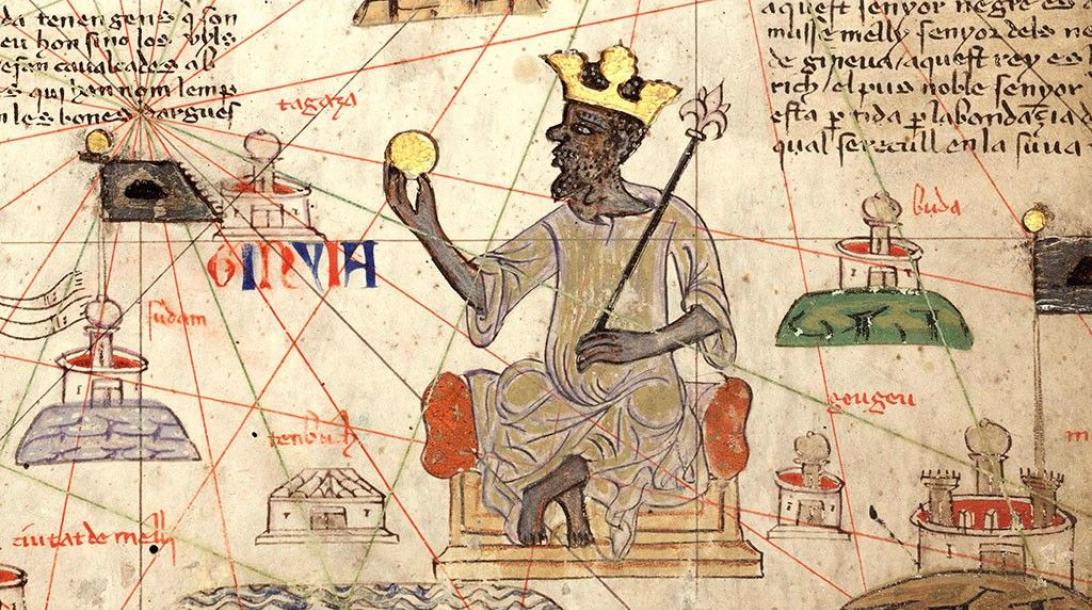
Mansa Musa (d. c. 1337), ruler of the Mali Empire, is mainly remembered for the gold he carried on Hajj, but his real legacy was what he brought home: scholars, books and architects who helped make Timbuktu a centre of Islamic learning.

Ahmad Baba al-Timbukti (1556–1627) was one of Timbuktu’s greatest jurists. He ruled that skin colour was no basis for enslaving anyone. Households that still call Black people “abeed” are repeating an idea that a Black Muslim scholar rejected four centuries ago.

Nana Asma’u (1793–1864), a poet and scholar in what is now northern Nigeria, saw women’s education as a religious duty. She trained a network of women teachers, the ‘yan taru, which still exists today. Two centuries later, many of our mosques still struggle to see Black Muslims as teachers of the deen.

Malcolm X (1925–1965) had preached, as a Nation of Islam minister, that Black and white people could never be brothers. On Hajj in 1964, praying alongside Muslims of every colour changed his mind. He returned as El-Hajj Malik El-Shabazz, convinced that Islam held the answer to racism, and brought that message to Britain. He visited Smethwick after a notoriously racist election campaign there, just nine days before he was assassinated.

Muhammad Ali (1942–2016) refused to fight in Vietnam on religious grounds and lost his title and years of his career as a result. For a generation, he was the most recognisable Muslim on earth: proud, principled and Black.

This history belongs to every Muslim, but we cannot share Black Muslims’ stories when they inspire us and stay silent when they need us. Anti-Blackness shapes whose suffering we notice, and Sudan is the clearest example.

The war between the Sudanese Armed Forces and the Rapid Support Forces began in April 2023 and is now in its fourth year. The IRC reports that 33.7 million people need humanitarian aid and more than 9 million are displaced inside the country, which the UN calls the world’s largest internal displacement crisis. Human Rights Watch reports that 24.6 million face acute hunger. When the RSF captured El Fasher in October 2025 after an 18-month siege, it carried out mass killings of people trying to flee. Yet funding for Sudan’s 2026 humanitarian response plan is only 42.8%.

The Muslim world has looked away: our communities have rightly marched and fundraised for Muslims suffering elsewhere, yet Sudan has received a fraction of that energy: fewer protests, and far fewer appeals after Jumu’ah. It may be because the politics are complicated, and media coverage is thin, but we should be honest about whether race plays a part. The Prophet ﷺ said the believers are like one body: when one part suffers, the whole body responds with sleeplessness and fever (Bukhari, Muslim). We should not ignore that our concerns weaken when the faces are Black.

The Prophet ﷺ confronted racism even among his closest companions. When Abu Dharr (RA) taunted a man about his mother, whom later narrations describe as a Black woman, the Prophet ﷺ told him: “You are a man who still has jahiliyyah in you” (Bukhari). Abu Dharr was one of the earliest and most devoted Muslims, and he was still corrected without hesitation. Being a practising Muslim has never protected anyone from prejudice. The sunnah is to call it out, including in ourselves.

Allah made us into nations and tribes so that we may know one another, and the most honoured of us in His sight is the most God-conscious (Qur’an 49:13). He commands us to "hold firmly to the rope of Allah, all together, and do not be divided” (Qur’an 3:103), and warns that division will cost us our strength (Qur’an 8:46).

Colour, ancestry and caste did not come from the deen. We learned them from colonial hierarchies and the cultures we carry. Every time we let them decide who we marry, who we trust and whose suffering we notice, we weaken ourselves.

The Prophet ﷺ described the believers as a building whose parts support one another (Bukhari, Muslim). A building is not strong because every brick is the same but because every brick holds the others up. We have a vast ummah stretching from Mali to Manchester and from Somalia to Sylhet proving Islam’s message: one Lord, one qiblah, and no one above another except in taqwa.

Recognising the problem is the start, but you have to take action to create change:

  • At home: challenge slurs and jokes, including from elders. Teach children the stories of Bilal, Umm Ayman and al-Najashi as their own history.
  • On marriage: judge proposals on deen and character, as the Prophet ﷺ instructed. Challenge families who refuse a match over race, gently and clearly.
  • In mosques: give khutbahs on racism and Black figures in Islam all year, not just in October. Bring Black Muslims onto committees, boards and platforms.
  • For Sudan: stay informed, share credible reporting and give to organisations working on the ground. Ask your mosque to hold a Sudan appeal and to make du’a for its people by name.
  • Listen: most respondents in the Muslim Census survey had never heard directly from a Black Muslim about these issues. Seek out those voices and believe them.

Bilal’s adhan still opens our day five times over, to honour that properly requires giving his descendants in faith the same place among us that the Prophet ﷺ gave him.

We are a faith-based British international charity that provides help to people who are victims of natural disasters or conflict or suffering from poverty, hunger, disease, homelessness, injustice, deprivation or lack of skills and economic opportunities.

020 7377 4200 | 020 7870 1602