Sierra Leone is a country in the southwest coast of West Africa with a population of about 8.6 million. Due to long years of political turmoil and economic hardships, it remains one of the poorest countries in the world. This has caused a huge obstacle in education of their future generations. Despite the state’s effort in improving education such as provision of teaching and learning materials, examination fees, and a school feeding program, school enrolment and retention rate remain low. In addition, Sierra Leones’ resident donor community remains relatively small to support the country’s huge development challenges (UN, 2022) .
0.458
Human Development value for 2021, which puts the country in the low human development category and keeps it 184 out of 195 countries and territories (UNDP, 2022)1
14.7%
of the population 15 or above are illiterate and half of those leaving primary school are unable to read or write. Just 61% of primary school teachers are trained (UNICEF, 2021)2
12.5%
of girls are married by the age of 15 and 38.9 per cent of girls are married by the age of 18 (among 20–24-year-olds)3
Select an option below to view
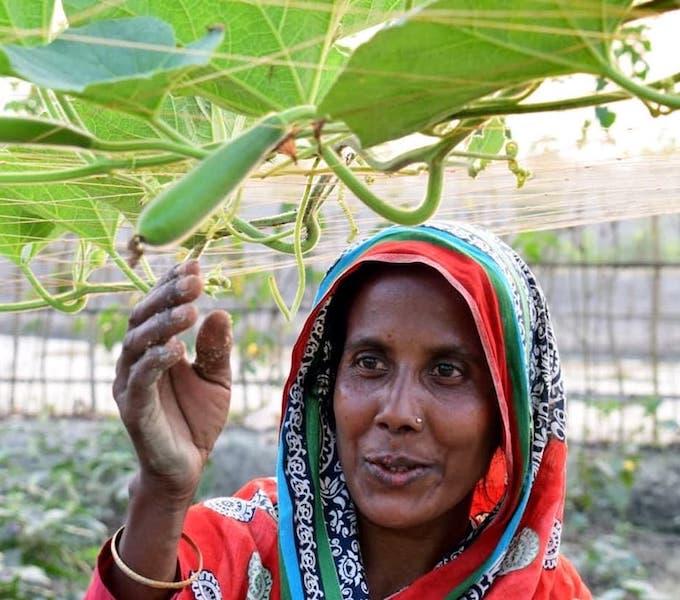
With an estimated 13.3 million people expected to become internal migrants in Bangladesh by 2050 due to climate change, and just a one metre rise in sea level would result in 17.5 per cent of the country being flooded, Muslim Aid Bangladesh is focused on implementing Disaster Risk Reduction (DRR) activities to support communities to withstand various shocks and stresses. Vulnerable communities in climate hotspots are being blindsided by cascading climate disasters without any means of prior alert. Muslim Aid Bangladesh is implementing projects that focus on strengthening communities’ capacity and resilience to disaster and climate risks through an inclusive approach, working with and for rights holders. Activities include renovating schools to be resilient against floods, conducting training on early warnings and early actions, organising behaviour campaigns on disaster preparedness, developing risk reduction action plans, conducting mock drills, developing community action plans, supporting climate smart agriculture and awareness raising sessions on coping and adaptation measures such as deforestation campaigns and tree plantations.
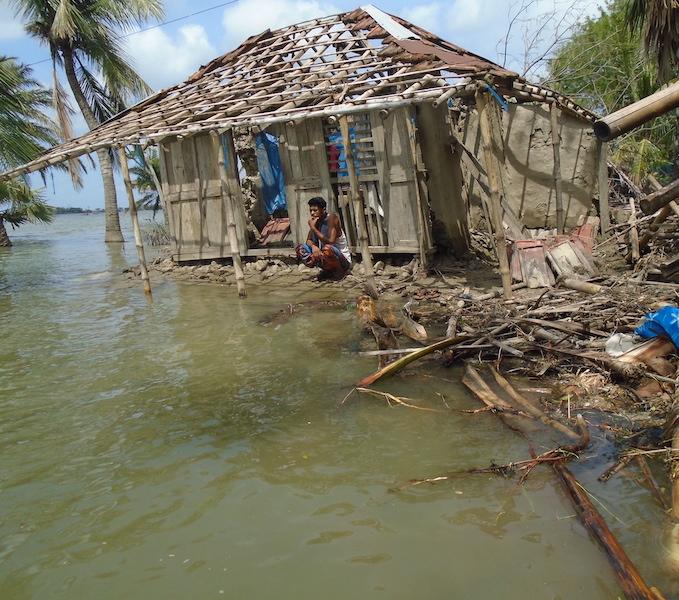
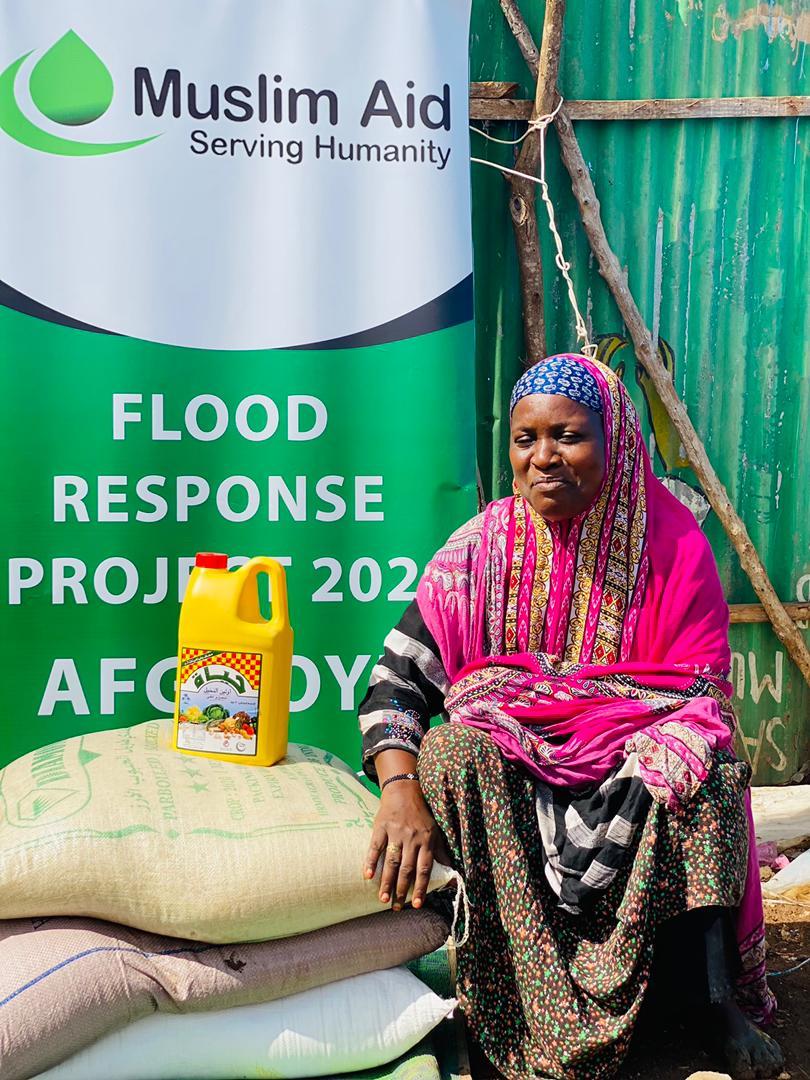
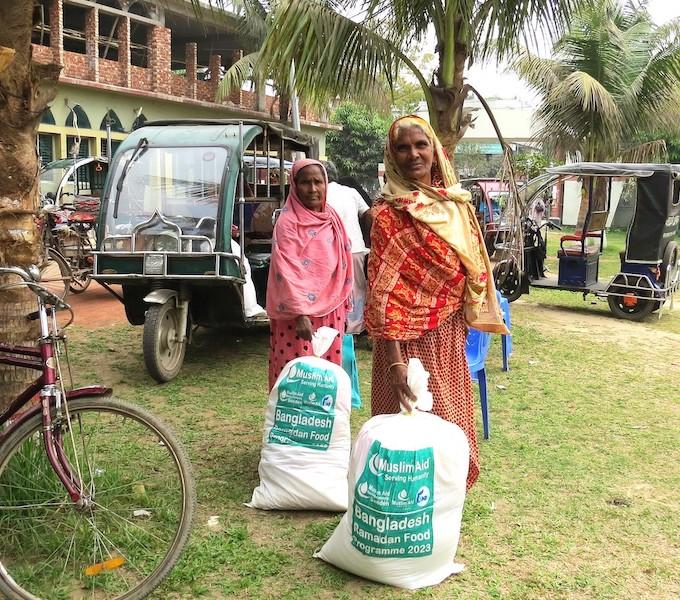
Bangladesh experiences frequent natural disasters including floods, droughts, and earthquakes due to its geographical location. As a result of climate change, these events are becoming increasingly regular, affecting farming, water, and impacting the living standards of communities. Muslim Aid Bangladesh is working hard to respond to these various emergencies, implementing early response and relief projects providing food, cash transfers, shelter and clean water, through to restoring livelihoods, homes and WASH infrastructure during recovery and rehabilitation phases.
Importantly, Muslim Aid Bangladesh is dedicated to the localisation agenda and aims to strengthen disaster risk preparedness by conducting preparedness interventions, capacitating local communities regarding Community-Based Disaster Risk Management and pre-financing interventions in disaster-prone areas across the country.
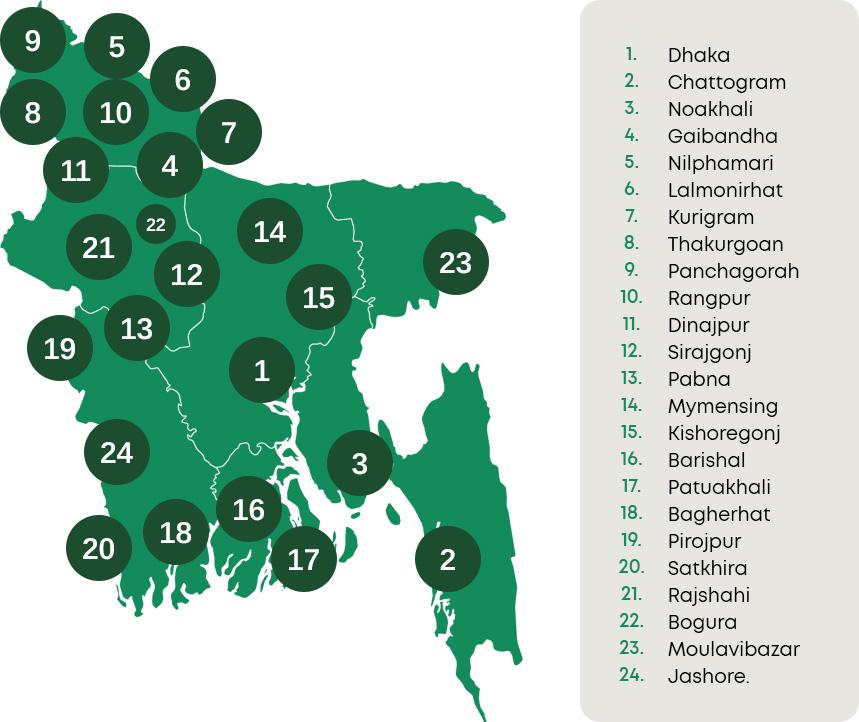
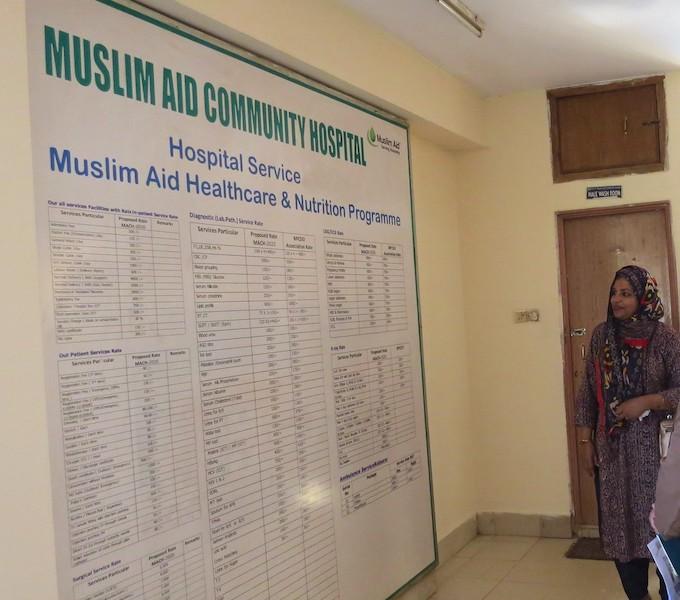
Since 1996, Muslim Aid Bangladesh has been delivering quality healthcare services to patients in three Muslim Aid Community Hospitals (MACHs) located in Kulaura, Pirojpur and Pabna. These hospitals support both in-patients and out-patients through the provision of ambulances, delivering antenatal and postnatal services including preforming caesarean deliveries, diagnostic services such as ECGs, USGs, and X-rays, performing routine operations, offering pharmacy services and vaccination programmes, providing satellite health camps, and organising school health campaigns. The MACHs have seen annual increases in beneficiary numbers, proving their acceptance among communities.
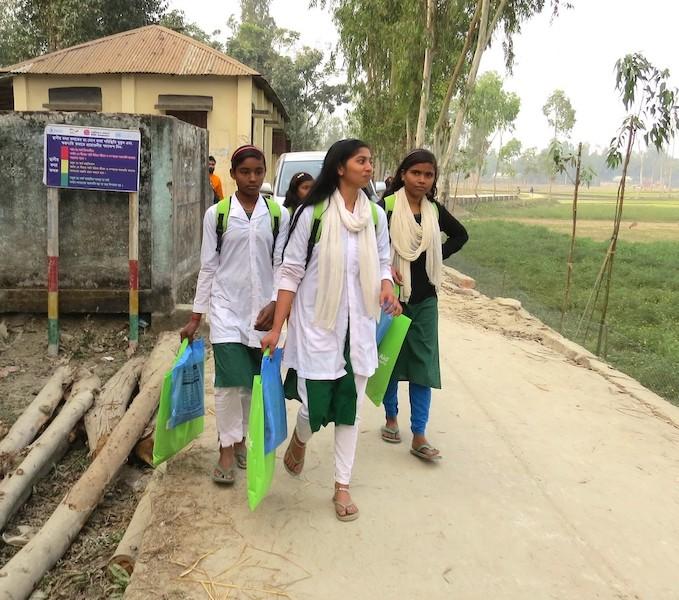
Muslim Aid Bangladesh has been implementing education projects for several years, transitioning to a Community-Based Model (CBM) in 2021. The CBM is a flexible and holistic strategy that adapts to the unique context of each community, allowing for relevant and sustainable interventions that address the underlying barriers to children accessing quality education. Soft components include enrolment campaigns, teacher training, awareness campaigns on the importance of education, and capacity-building programmes for key stakeholders. Meanwhile, hard components include renovating WASH blocks to ensure inclusion, reconstructing classrooms and distributing scholastic materials.
Since 1996, Muslim Aid Bangladesh has been delivering quality healthcare services to patients in three Muslim Aid Community Hospitals (MACHs) located in Kulaura, Pirojpur and Pabna. These hospitals support both in-patients and out-patients through the provision of ambulances, delivering antenatal and postnatal services including preforming caesarean deliveries, diagnostic services such as ECGs, USGs, and X-rays, performing routine operations, offering pharmacy services and vaccination programmes, providing satellite health camps, and organising school health campaigns. The MACHs have seen annual increases in beneficiary numbers, proving their acceptance among communities.
In future years, the MACHs plan to expand their services to further meet community demand, such as the inclusion of WASH, physiotherapy and nutritional support.
600
children provided increased access to quality education
3,000
school materials including uniforms, bags, shoes, exercise books and pens delivered
90
teachers trained in classroom management





We are a faith-based British international charity that provides help to people who are victims of natural disasters or conflict or suffering from poverty, hunger, disease, homelessness, injustice, deprivation or lack of skills and economic opportunities.
© Copyright 2026. Muslim Aid - Help Muslims Around the World in Need . All Rights Reserved.
Charity CIO No. 1176462
Serving humanity since 1985.