Today • Islamic Date -

Next Prayer: London -

Recent Donations -

Muslim Aid Media Centre

Ramadan for New Muslims Guide

Ramadan is a blessed month for Muslims worldwide, a time of fasting, prayer, reflection and drawing closer to Allah (SWT). If you have recently accepted Islam, your first Ramadan may feel exciting and overwhelming at the same time. The good news is that you are not expected to know everything straight away. Ramadan is a journey of learning and growing, and with time, your relationship with Allah will grow too.

Understanding Ramadan as a New Muslim

Ramadan is the ninth month of the Islamic calendar and the holiest time of the year for Muslims. It is the month in which the Quran was first revealed. During Ramadan, Muslims fast from dawn until sunset, abstaining from food, drink and intimacy. Fasting is about more than going without food. It is a practice of patience, self-control and gratitude.

Allah says in the Quran: “O believers! Fasting is prescribed for you as it was for those before you, so perhaps you will become mindful ˹of Allah˺.” [Quran 2:183]

Fasting is obligatory for every adult Muslim who is able. Allah (SWT) has made exemptions for those who are ill, travelling, menstruating, pregnant or breastfeeding. These fasts can be made up later. If you eat or drink by mistake, you can continue fasting, as this does not break it.

Preparing for Your First Ramadan

Preparing in advance can make your first Ramadan feel much easier. Start by finding the fasting times for your area, from your local mosque’s timetable, so you know how long each fast will be.

Each fast begins at Fajr, at dawn, around an hour and a half before sunrise. It ends at Maghrib, at sunset. Muslims eat a pre-dawn meal called Suhoor and break the fast with a meal called Iftar. Make the intention (niyyah) to fast each day. This means deciding in your heart that you are fasting for Allah; you do not need to say it aloud.

Adjusting your sleep before Ramadan can also help; you’ll be waking early for Suhoor and may stay up later for night prayers.

One of the most useful first Ramadan tips is to keep things simple. Start with the basics, practise what you already know, and build on it as the month goes on.

Take Your Fasting One Day at a Time

Your first fasts may feel difficult, especially if you’ve never fasted before. Hunger and tiredness are normal, and your body will adjust over the first few days.

Eat a filling Suhoor with slow-release foods, drink plenty of water between Iftar and Suhoor, and try not to overeat when you break your fast (as tempting as it is!).

Waking up for Suhoor can be difficult, but the Prophet ﷺ encouraged it, saying: “Take Suhoor, for there is a blessing in it” (Sahih al-Bukhari 1923).

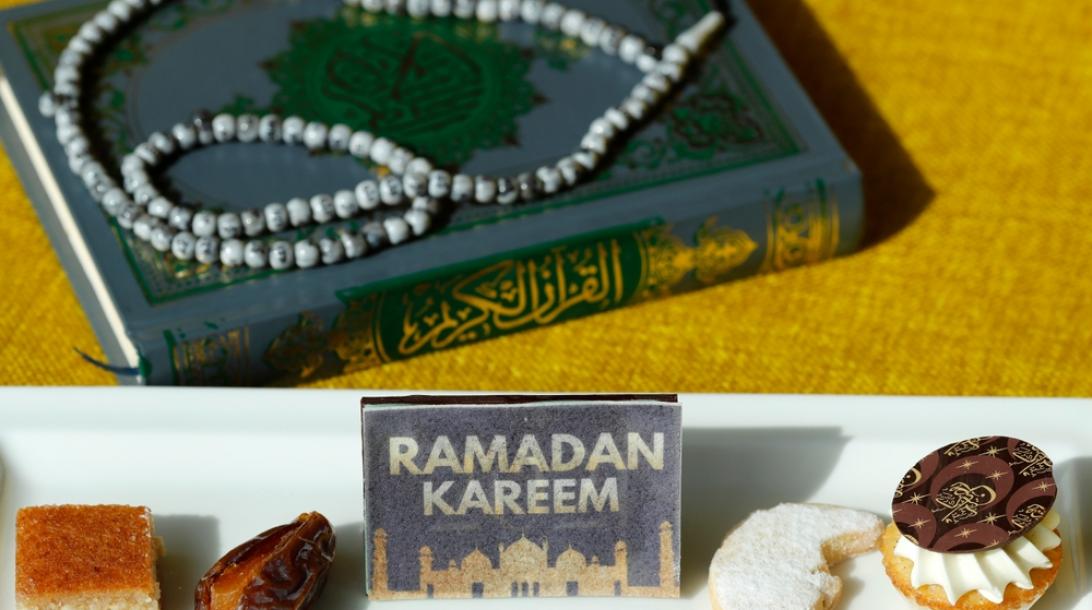
At Iftar, many Muslims follow the Sunnah by breaking their fast with dates and water before their main meal.

Remember, Ramadan is not a competition. If the first few days are hard, don’t be discouraged. Every day is a new chance to learn and improve.

Build Your Connection with Allah

Fasting is only one part of Ramadan. The month is also a chance to spend more time in prayer, make dua, recite the Quran and remember Allah.

As a new Muslim, you may still be learning how to pray or memorising your first short Surahs. Go at a pace that suits you. The Prophet ﷺ said: “The most beloved deeds to Allah are those done consistently, even if they are small” (Sahih al-Bukhari 6464). Speak to Allah through sincere dua in your own words, in any language. He hears them all.

The Prophet ﷺ also said that whoever fasts Ramadan with faith and hope of reward will have their previous sins forgiven (Sahih al-Bukhari 38). This reminds us of the immense mercy found in this month.

You don’t need to read Arabic to connect with the Quran. Reading a translation and reflecting on its meaning can strengthen your faith and your connection with Allah.

Ramadan Is a Time for Giving

Charity is central to Ramadan. Hunger reminds us of those who go without food every day, and of the blessings Allah (SWT) has given us.

For a new Muslim, giving is also a way to feel part of the wider Muslim community. Donating to help the vulnerable and feeding those in need are acts of worship that strengthen your faith. At the end of Ramadan, every able Muslim also pays Zakat al-Fitr (Fitrana) on behalf of themselves and their dependents before the Eid prayer.

Muslim Aid supports communities facing hunger and poverty in conflict- and disaster-affected areas worldwide. Giving in Ramadan lets you put kindness and compassion into practice while helping those who need it most.

Find Support Within the Muslim Community

You don’t have to experience your first Ramadan alone. Your local mosque can connect you with other Muslims, including other new Muslims experiencing their first Ramadan, and with people who can answer your questions.

Consider joining a community Iftar or attending Taraweeh, the special night prayer held in Ramadan. Taraweeh is a recommended Sunnah, not an obligation, so it’s fine to pray at home or skip a community event when you need to. What matters is your intention and sincerity.

Most importantly, don’t be afraid to ask questions. Every question is an opportunity to understand your faith more deeply.

Make Your First Ramadan Your Own

There is no perfect way to experience your first Ramadan. Some days will be easier than others. What matters is your effort and your desire to grow closer to Allah.

Instead of putting pressure on yourself to do everything, set a few realistic goals, such as improving your prayer, learning a new Surah or reading a little Quran translation each day. Making dua and giving charity are also acts of worship. As your confidence grows, you can add more.

Above all, remember that embracing Islam is a beautiful new beginning, and your first Ramadan is one more step on that journey. Approach it with patience and sincerity, knowing that Allah sees every effort you make.

May Allah make your first Ramadan peaceful and rewarding, strengthen your faith, accept your fasts and prayers, and guide you throughout your journey as a Muslim. May this Ramadan be a stepping stone that brings you closer to Him and inspires you all year round.

We are a faith-based British international charity that provides help to people who are victims of natural disasters or conflict or suffering from poverty, hunger, disease, homelessness, injustice, deprivation or lack of skills and economic opportunities.

020 7377 4200 | 020 7870 1602